I love the study of Economics. It is an incredible tool for understanding people’s behaviour.
To a normal person, an economist seems very ordinary; there is nothing that remarkable about them. But to an economist, a normal person is fascinating! Economists try to understand how a normal person thinks, acts and makes choices.
Once we understand how one normal person thinks, we can apply that framework to the whole world. If everyone follows certain patterns of thinking, we can predict how little changes will the choices people make and thus lead to huge changes in society. Using the framework we have developed, we try to understand the world’s problems and to uncover elegant solutions.
I’m often asked, out of all the amazing people to have contributed to this incredible body of ideas, which is my favourite. Might it be Adam Smith, for discovering how the ‘invisible hand’ magically leads to collaboration between people who may never meet? Might it be John Maynard Keynes, for showing the world a way out of deep depressions to fundamentally improve our lives? Might it be Joseph Schumpeter for seeing how short term exploitation by the powerful gets eroded through ‘creative destruction’, for the long term advancement of the human race?
Evolution of humanity… will mean the development of certain inner qualities and features which usually remain undeveloped, and cannot develop by themselves.
Ouspensky
Although I have a soft spot for many economists, including those three, my favourite economist is someone else. It is someone very well-known, but rarely given their due credit as an economist.
The basic economic problem is that we have infinite wants but limited resources. We assume that human nature means that when we get our hands on the thing we wanted, we experience a fleeting feeling of satisfaction before we want to get our hands on something else. Humans always want more but there are limits to what we can make with the resources we have. Most of Economics focuses on how best to allocate our resources between those competing wants, but my favourite economist gifted the world a way to solve the basic economic problem.
What if, instead of focusing on the branches, we went to the roots? What if that thing called ‘human nature’ was just ‘human habit’ and we could choose a better way? What if, instead of trying to allocate resources in the optimal way, we chose to focus on maximising our bliss instead of just consuming more goods and services?
My favourite economist gave the human race a guide for how to achieve bliss. It does not depend on consuming more goods and services, but it depends on training the mind to be deeply, truly, authentically happy. It depends on analysing our perceived need to accumulate more possessions until we realise that we are happier with a ‘middle way’. It depends on having enough to meet our needs but emancipating ourselves from the need to strive for more and more unnecessary desires.
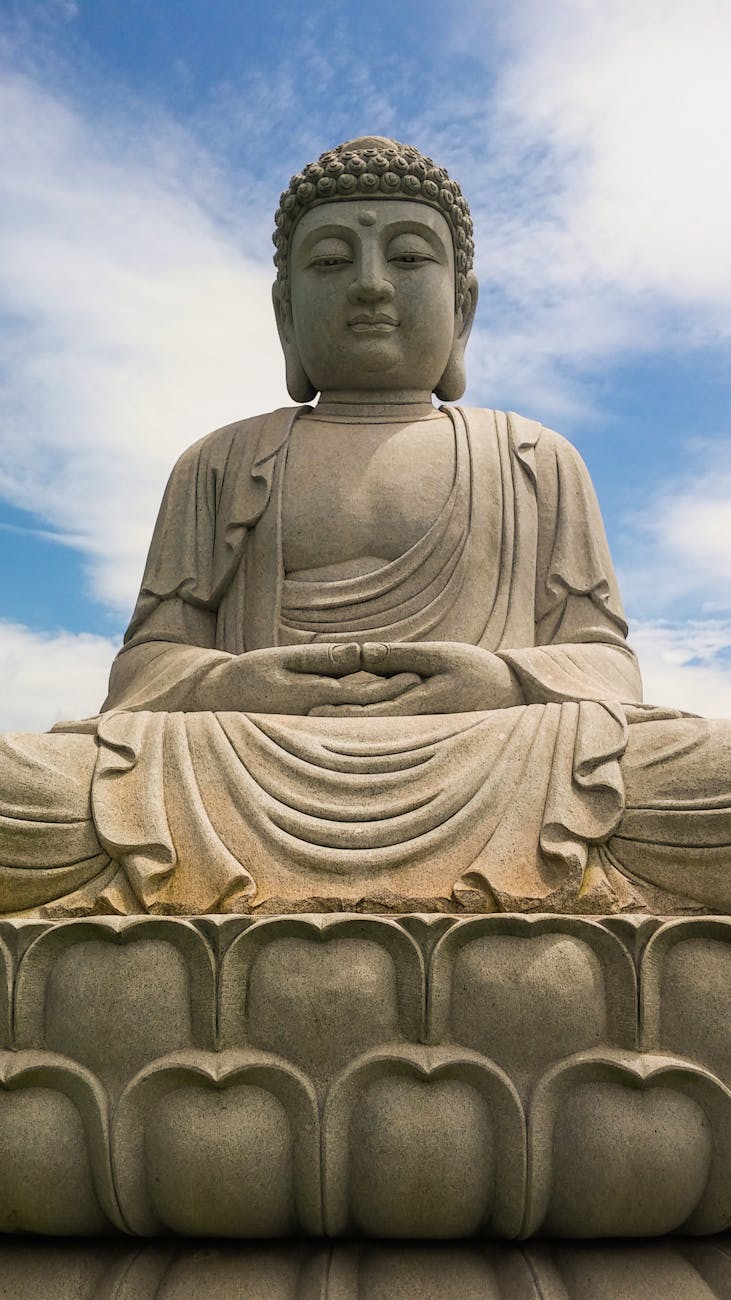
Therefore my favourite economist is Buddha, for showing that the basic economic problem can be solved. If we choose to develop our inner qualities rather than to acquire more outward possessions, then we can consciously speed up the evolution of the human race. We can maximise our bliss rather than maximise our ‘utility’.
I believe that we are all free to choose what we pursue in life. I believe that, one by one, we can choose to free ourselves from the basic economic problem. I believe that we can live our lives seeking to maximise our bliss. Thank you to my deeply-cherished favourite economist for showing us the way.
 Be The Plus
Leave a comment